So i started writing this down after going through a train of thought in my mind palace that seemed, at the time, really illuminating. Having now put down a first draft of the post to paper i find myself rehashing things i have said in other posts, and stuff that seems a little obvious in retrospect. But don't all things feel that way once you write them down.
I spend a lof of time in my blogging spitting at Artists and Artisans and their neuroses; and i guess i should acknowledge that, for a very long time, i shared these aspirations and shaped my own ambitions after them. So maybe it's time to flip the script and shed some light about My Path, My Journey, the contradictions i encountered that made me break with this world. Like not in a biopic way but with examples and stuff.
craft VS industry: the glass blowing case study
As far as i can remember my drive to "make art" has been based on a magpie-like animal brain fascination with trinkets, little sceneries, small models, etc. Same reason I now have 10 fishtanks and jars in my apartment. I also love all things natural sciences. So after a few recent natural history museum visits, I have come to the conclusion that my absolute top 1 dream job would be: making the animal models for museum exhibits, with bonus points for the ones that have transparent layers so you can see internal organs, and fully annotated dioramas.
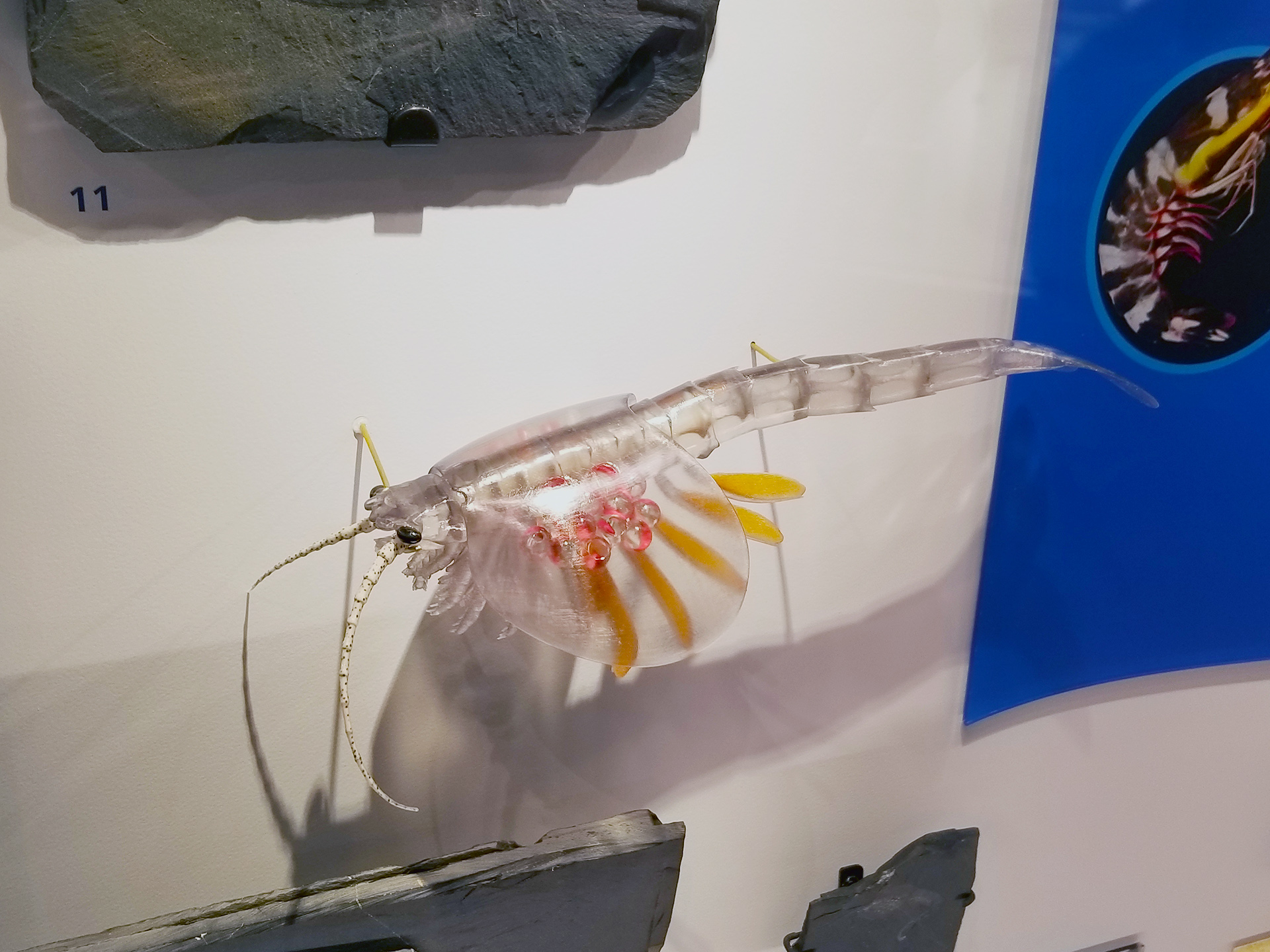
Waptia model, Royal Ontario Museum
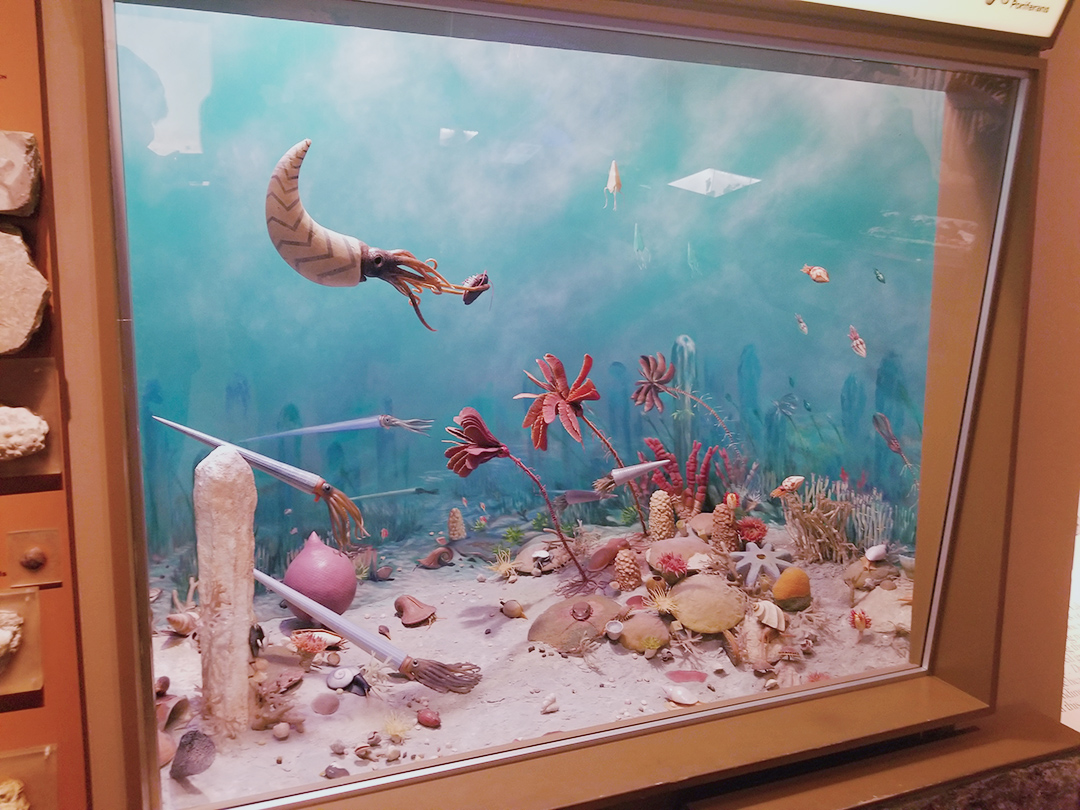
Cambrian sea life diorama, Manitoba Museum
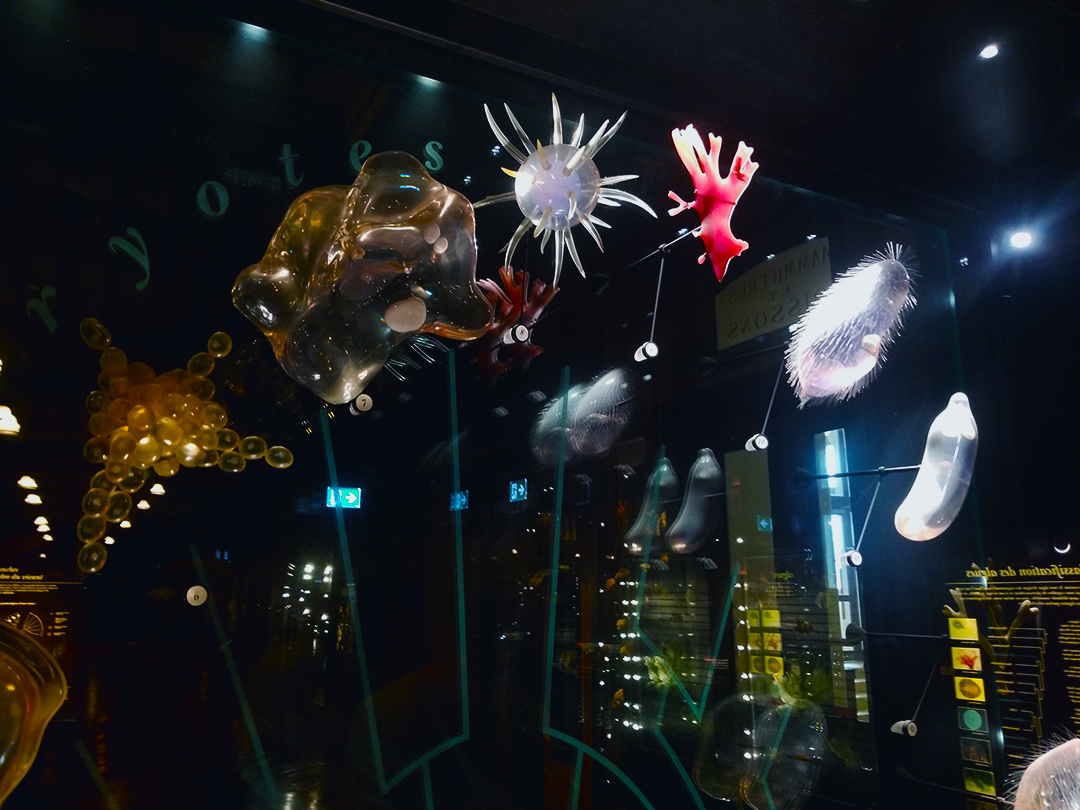
Tree of life display, Grande Gallerie de l'Évolution
But how do you get to do that job? Where do you even begin to learn those skills?
This train of thought was revived while watching a video by Angela Collier, a physicist with a cool youtube channel. She talks about how important glass is for science, as a material. In so doing, she shares anecdotes about glass blowers who work in universities to make bespoke glass containers for very specific needs depending on the experiments that they are needed for. One particular detail stuck with me: this type of glass work, she explains, can't be requested to industrial glass production factories. Not only do they not have the tools for the level of specificity needed, but they also can't afford to stop the entire chain of production for an entire day just to create one (1) extremely specific little vial. Enter the traditional glass blowers, a craft that predates the industrialization of the field. Universities that do the kind of science work that requires dedicated glassware have dedicated glass blowers on staff, who also end up having an incredible depth of knowledge about chemistry, physics, biology, astronomy, etc - by virtue of working with all the other departments and thinking through what kind of glass each experiment requires and how to create it and ensure it is durable enough.
But there is another detail within that story tucked at the end of the video. These glass blowers, she says, seem to all come from families of glass blowers (and they're all guys also,, ) - boys trained by their fathers, who have "10 years of glass blowing experience" by age 19 but no formal training or degree.
I started reading interviews and I noticed Mike Souza's dad was a glass blower, and the man who retired from Caltech - he was 72 at the time and he had 55 years experience and his parents were glassblowers, and... And so I wanted to check out from the University of Kentucky and wouldn't you know: [his father is a glass blower]. Where is the giant nepo baby expose of the glass blower industry? What is this, if I want to be a glassblower I can't get into glass one just because I don't have 25 years experience? That's not fair!
Angela Collier, the most important material in science
This is where I start to conjecture: it seems like glass blowing, especially the niche science kind, is organized on the model of precapitalist family-based artisanal dynasties and guilds and was never upgraded to post industrial formal education. That makes sense to me, given that the process of creating standardized glassware and glass panes is highly automatable in industrial settings, and doesn't require glass blowers past that point. So in the contemporary level of industrial development, glass blowing as a skill only finds a use in bespoke university needs - or luxury pieces, which we'll get back to. But that also means that no accessible education track was ever developed for this field, and that openings for the positions of Official Blower of Glass are exceedingly rare and do not hire through formal channels.
And much to my dismay, I have to assume the same applies to making cute natural history museum models. Similarly, to making museum display stands (fascinating gig btw), or anything that's too niche to have a demand at the level of the market and look tasty for industrial capital. There we go, i said the word.
online commodity markets: the nervous puzzles case study
What if instead of seeking employment in an existing field, you instead directly sell your trinkets to paying customers?
We now turn to a field example with Nervous System, a mom and pop "generative design studio that works at the intersection of science, art, and technology" - in short, they create products based on natural patterns found in plants, plankton, etc.
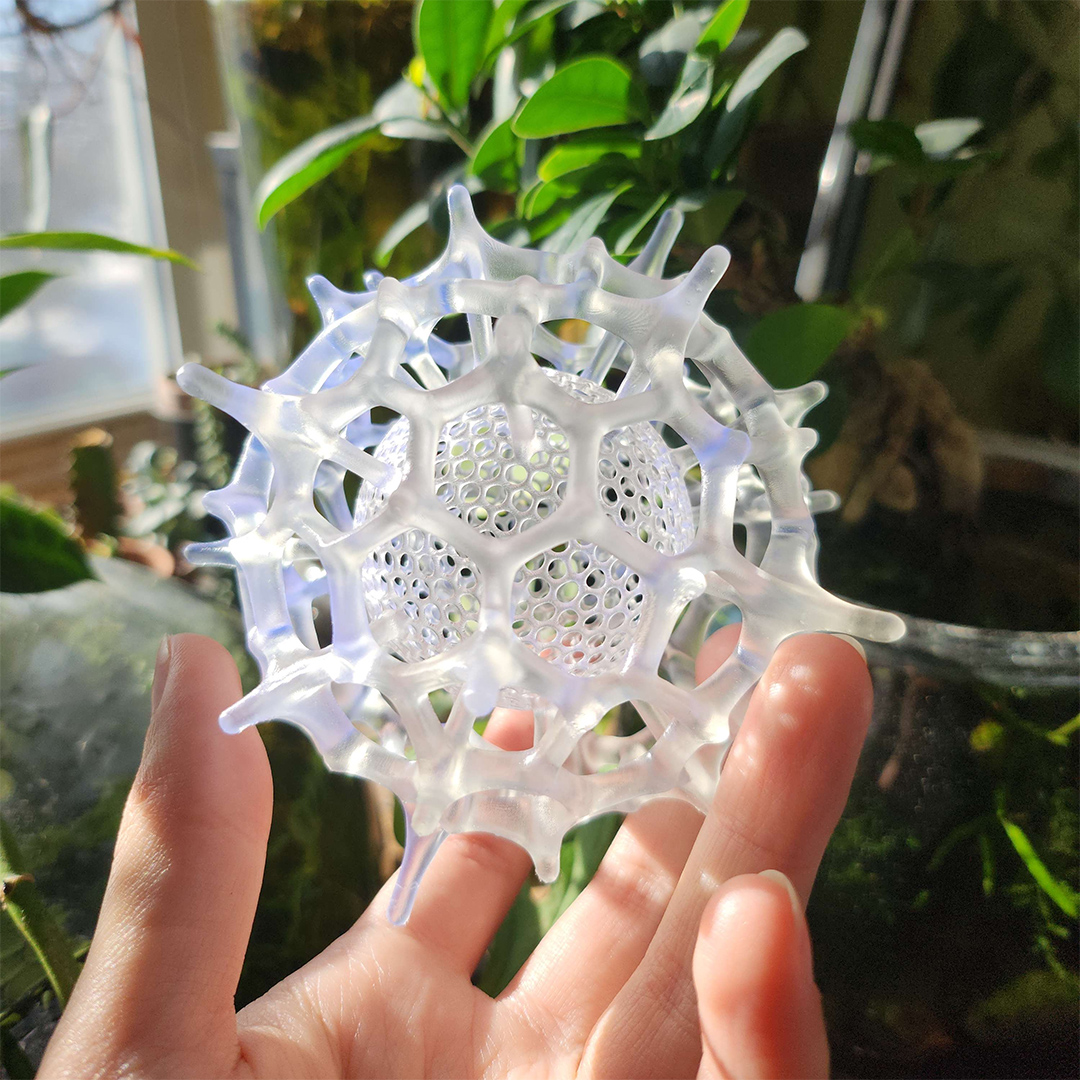
Their fine artistic - scientific - crafty stuff mostly ends up targeting a luxury market (jewelry, or this achingly beautiful radiolaria 3D print i shelled out a cumulated ~ $350 on patreon for because, I Am Not Immune), and bespoke one-off giant sculptures for public spaces (yay) and corporate lobbies (boo). Sad!! But inevitable:
Their more accessible products are also the most easily bootlegged. The animal puzzles which they started selling, in particular, were immediately spoofed and you can now find endless variations of this concept for 1/10th of the price. And some sellers can produce them much cheaper and outcompete everyone else, because they have industrial automation available.
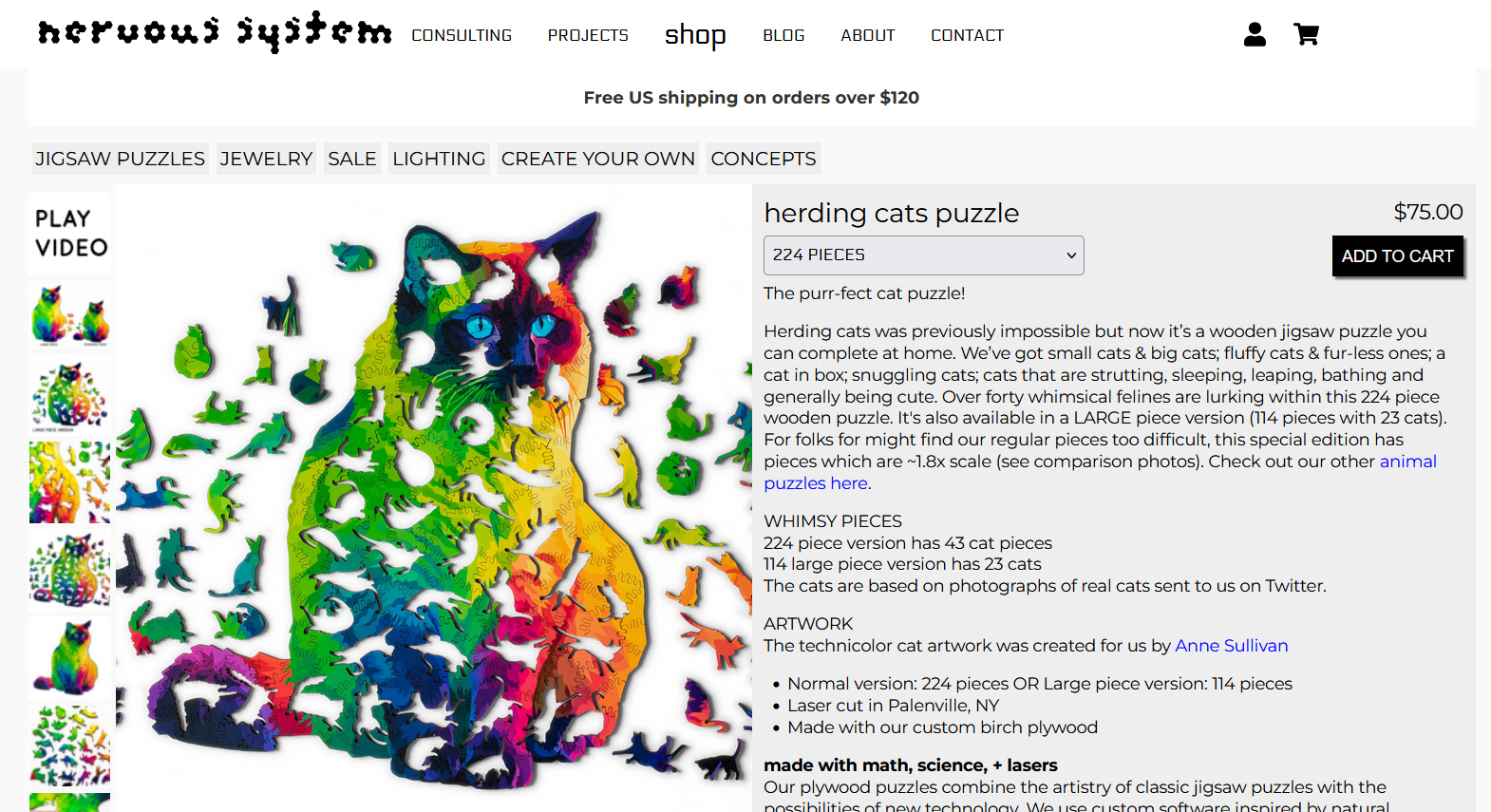
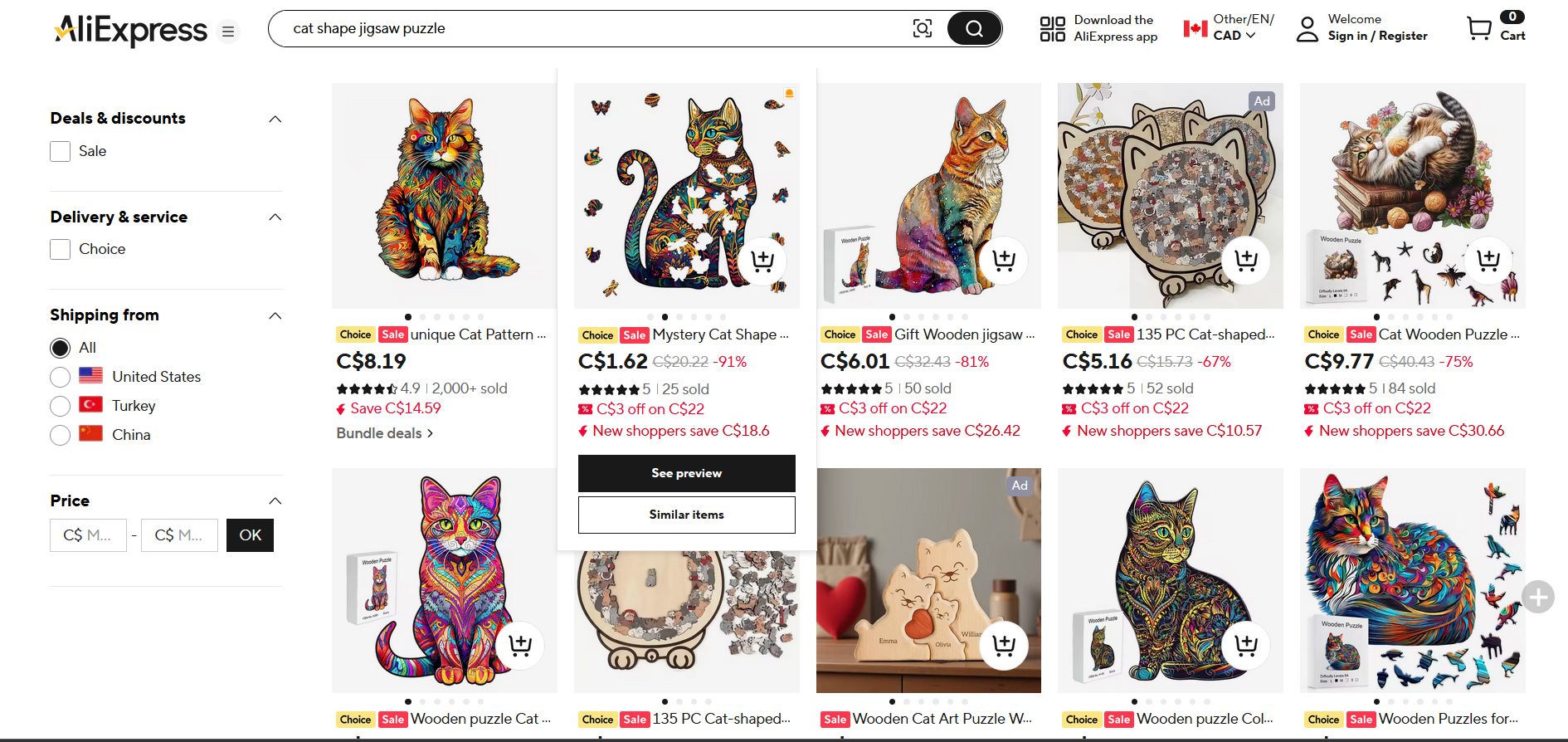
This is completely unavoidable under capitalism, it is baked right into the base principles under which our economy functions: free market competition and the race for cheaper products.
Fundamentally though, it's a good thing that we can make things cheap and automate production! Even as their "cheaper" line of products, Nervous System's puzzles fetch prices that sometimes go above $100 (US!). It's not a bad thing for Society that we can manufacture more affordable stuff - and it also means more people get to actually engage with the stuff.
The problem arises because these kinds of small business artisans depend on this stuff for livelihood. So small outfits like Nervous System can't afford to experiment with more products like this, have to focus on bespoke, luxury, expensive products instead of cheap and more numerous Cool Stuff.
IP will not save us (that again)
The other place where this kind of experimentation and craftiness happens is in industry R&D departments. But due to the corporate secrecy motivated by competition, these people can't show their work Ever.
If you're lucky, some product comes out 10 years after you did some work on its prototype (most projects get shelved, so that's already a small minority). But even then you can't really talk about the other prototypes, the other ways it could've happened, etc. So much of your work, your life during that time, the exciting parts of creating something new - you're not allowed to talk about any of it. Alienating!! Sucks!!
And in practice, R&D is less and less needed precisely because an economic ecosystem develops where the small companies (nimble, can experiment, but very volatile and cost-ineffective) can try new stuff, and big industry can just monitor that instead of doing research. Our puzzle example illustrates that again: all they have to do is browse popular patreons and etsy listings to poach.
In liberal theory, this is where patents and IP comes in to protect the Prerogative of the Inventor, or whatever. But IP operates through legal frameworks of time-consuming, costly and straining court processes. Can small companies afford to fight copycats? Obviously not, and if one of them gets a slap on the wrist 10 more will pop up before the end of the process either way.
And IP sucks!! IP follows the lines of power that already exist in the economy and just reinforces them. It's how companies control culture with an iron grip, it's precisely why R&D workers have to shut up about anything interesting they work on. It's why if your studio's game gets cancelled mid-production you're not allowed to talk about these 5 years of your life with anyone ever and you have to up your antidepressants.
(In a past blogpost i argued - clumsily - that the whole concept of authorship as it is deployed in liberal society is an expression of this logic: it erases the collaborative and lengthy working process behind a piece to replace it with the single individual act of bringing the piece to the market. IP seldom protects the act of work, it protects the property owner's exclusive prerogative to sell the commodity for profit, taking it away from anyone else with a parental claim. Its primary effect is alienation.)
None of this can be stopped by simply arguing about it, because it is baked into the system at its deepest roots. If you convince one CEO to stop doing it, the company's competitor will immediately replace them and be rewarded by the market for taking the opportunity. You can't argue your way out of a market incentive.
If you're in indie games, that's why you're fucked too. Welcome!
"but it worked for them!": the right place at the right time theorem
Fundamentally the only way this sort of niche, fulfilling work can happen is either if you luck out and find yourself in the right place at the right time, or if we create a new society where we have time and resources to do that shit for its own purpose without needing to turn a profit out of it.
This "right place at the right time" rule is a strikingly common pattern, and my experience is that you start seeing it absolutely everywhere once you've caught it. We already described it in the case of glass blowers: you come from a lineage of glass blowers and heard of the university job offer right when it opened. You now have a great career that can't be replicated by anyone else. But this pattern also applies to more mainstream industries in the moment of their birth: if a niche develops into a field of industry and a new market grows, there is a narrow window between the two phases where a few representatives can ascend to a kind of stardom that becomes aspirational, but can't be reproduced. The lucky individuals will be those who start selling their stuff right when the expansion of the new market creates an opportunity for profit, but before the market is saturated with newcomers, competition flies up for everyone and in turn, profit margins come crashing down.
Let's look at concrete examples:
case study 1: Trixie Mattel
The world of ballroom and drag was getting more and more mainstream attention over the turn of the millennium until RuPaul's Drag Race, with a bash of reality TV cudgel, completely twisted it into a worldwide mainstream consumer market. This process was completed for good when contemporary social media developed alongside it to create the kind of super-mainstream drag world we know and hate - epitomized with the infamous fan mob harassment patterns that started around season 7 of the show. (I have not done a deep analysis of all this and i am not a rpdr scholar by any metric don't scream at me if i'm off). Anyway, enter Trixie Mattel, who went from broke season 7 filler queen to millionaire celebrity business owner landlord.
I am not denying that Trixie (and other breakaway stars from seasons 5-7 of the show) is talented and has a lot of business acumen. But there are countless queens with both of those qualities. The thing with this career path is that it didn't exist before the show grew to be mainstream; but it is also impossible to reproduce now that countless drag reality shows are airing constantly, and there are more queens competing under higher standards with every passing year. Trixie was at the right place at the right time and seized that opportunity.
case study 2: Vlambeer
As far as indie games are concerned, you could basically make this argument about all indie darlings. The indiepocalypse discourse is essentially a moral panic about this phenomenon, from the narrow perspective of anxious entrepreneurs who didn't realize that the economy is in perpetual motion and nothing in the "business wisdom" they swallowed was permanent. Metaphysics OWNED by dialectics once again.
We can look to Vlambeer as maybe the clearest example of the phenomenon: two boys drop out of uni to make platformer games right at the time where gamemaking tools are starting to make this easier to pull off, but competition is nonexistent. While they become industry celebrities and household names, the indie games floodgates open wider and wider, and we find ourselves in the wreckage we call the present. Indie darlings of the Vlambeer generation, for all their talent, find themselves unable to give any career advice to the ever-increasing number of game development program students who turn to them year after year.
Does the writer of this blog have complicated feelings about establishing himself as an ultra-specialized unity3D indie games artist by stepping into the field right when unity and shaderforge came along? This question shall be left as an exercise for the reader.
--
What makes this phenomenon so damaging is a combination of traits of our culture and economy:
- The mechanisms of celebrity and brand recognition, and of vulgar capital accumulation, ensure that the lucky ones can keep their career afloat for their entire life (if they make the right choices and the field doesn't fall out of favour). Once they have built a sizeable capital, it will keep turning a profit by itself, and the resulting staying power of their Brand combines with cultural inertia to make them a near-permanent fixture of their field of industry.
- The people who get lucky become celebrities, and are lionized because they provide a convenient narrative to hide the unfairness of our reality. Trixie is a poor gay kid from the countryside who became rich through talent and perseverance! The Vlambeer boys dropped out of school to follow their own path and their innovation and entrepreneurship prevailed! etc.
- These people thus become aspirations to the next generation in this market, but this new generation is operating under completely different economic conditions, and the lucky celebs are unable to give any appropriate advice. Worse, they are incentivized to give bad but inspirational advice, because it fosters their own career if they want to turn to consultancy or the public speaker grift-circuit.
And thus these stories of success are held up as blueprints when they literally can't occur again.
audience math despair
For me, the real monster lurking under all these stories that we haven't brought out yet, the real thing that makes me want to take a flamethrower to the entire culture of arts-as-career that we have today, is the question of the creator-audience split. The idea of "artists" and "audiences" as separate and ontologically distinct groups is poison, i cannot imagine my creative practice existing outside of a community of peers operating on a somewhat equal basis. Yet if you look at all the advice self-identifying artists give each other about how to use social media, it's all a question of reach and follower count. You want to make indie games? Let's talk about the best time to post a trailer, steam wishlist counts and early access discord to Engage With The Players. Let's discuss the ideal number of tiktoks you should post a day.
This is the filthy underbelly of the twin issues of competition and low profit. You have high competition, so you don't make a ton of money with your work, so you need to amass a vast number of prospective customers to stay profitable or switch to producing luxury goods if you have access to an exclusive market. We're back to the original issue.
The numbers game is inevitable whether you go the cheap slop route (to make enough micro sales) or the luxury route (to increase the chances that someone who sees your work is actually rich enough to afford it). This encourages artists to cater to trends and memes, to smooth out the sharp corners, to reproduce what's known and safe and popular and stay clear off anything too weird or complicated. This is the commodification to slop pipeline. Can You Pet The Dog?
Worse yet - not only do you have to rope insane numbers of people into "the audience" to sustain yourself economically as a career artist, if any of them starts making their own shit they become a direct competitor (at least for audience bandwidth). You are incentivized to view your audience as customers rather than peers, to teach noone and keep your secrets, to amass countless followers who you can't develop real relationships with. All goes against what is good for culture, and for society. And when you start noticing it, you are encouraged to blame The Audience for it.
The math is such that gatekeeping and inequality are absolute conditions to our existence as career artists. If anyone can be an artist, the balance of competition and profits collapses. So only a privileged few are allowed to pursue this life - often at great personal cost, it remains a precarious career - while most people are told it Just Isn't For Them. This profound inequality is naturalized into an ideology of arts where only Some People are Born Creative, and the masses are assumed to lack this drive. This is a fascist mindset, and it underlines the whole edifice of the Arts; its entire purpose is the obfuscation of economic inequality.
The contradiction that burned a hole in my brain since school, the question that came first and stood last, is a simple one: is what i do with my life something anyone else could do if they wanted? And if not, how is it fair?
jailbreak
At this point in the post everyone should be pretty depressed. So what do we do about this sad state of affairs? Individually one solution is to sever the drive to satisfy one's creative life urges from economic survival, find a normal job and make art on the side. No more market competition, no more profit requirement, just good fun and genuine community. Except art and culture are social, so we can never escape the market or the discourse entirely - even decommodified art only exists in dialogue with culture writ large. And if jobs take most of our waking hours, do we still have time and energy to develop a practice on the side? Not to mention, for people like me who made the mistake of getting a degree in a specific arts-related field, switching careers comes with challenges.
So this is one possible short term way to, if not escape the market tyranny, alleviate its effects on an individual level. But real freedom can only come through social change, and clearly many people want it because they keep ranting about how art is Bad now, it's Slop, it's Boring, it's Sexless or it's Just Porn, they don't do it like they used to, etc. - so how do we go from complaining to changing things?
This is where we need to pull out the big guns and do real, rigorous analysis of the whole economic system so we can change it. Find where power is, figure out the mechanics and the weak points of the apparatus. Time To Read Marx And Engels.
Philosophers have hitherto only interpreted the world in various ways; the point, however, is to change it.
Karl Marx, Theses on Feuerbach
TRUE LOVE IS POSSIBLE ONLY IN THE NEXT WORLD - FOR NEW PEOPLE. IT IS TOO LATE FOR US. WREAK HAVOC ON THE MIDDLE CLASS
Next World Mural, Disco Elysium
Embrace working class organization, upend the rule of capital and business, abandon the present for the sake of the future.
(Because the truth is, the present will abandon you first! Our world is not static. Dialectics, marxism's philosophical component, help make sense of that! The world is motion and contradictions - don't plan your life based on what worked before, analyze the direction of change.)
Should i rally the book club freaks to work on a capital crash course blog???